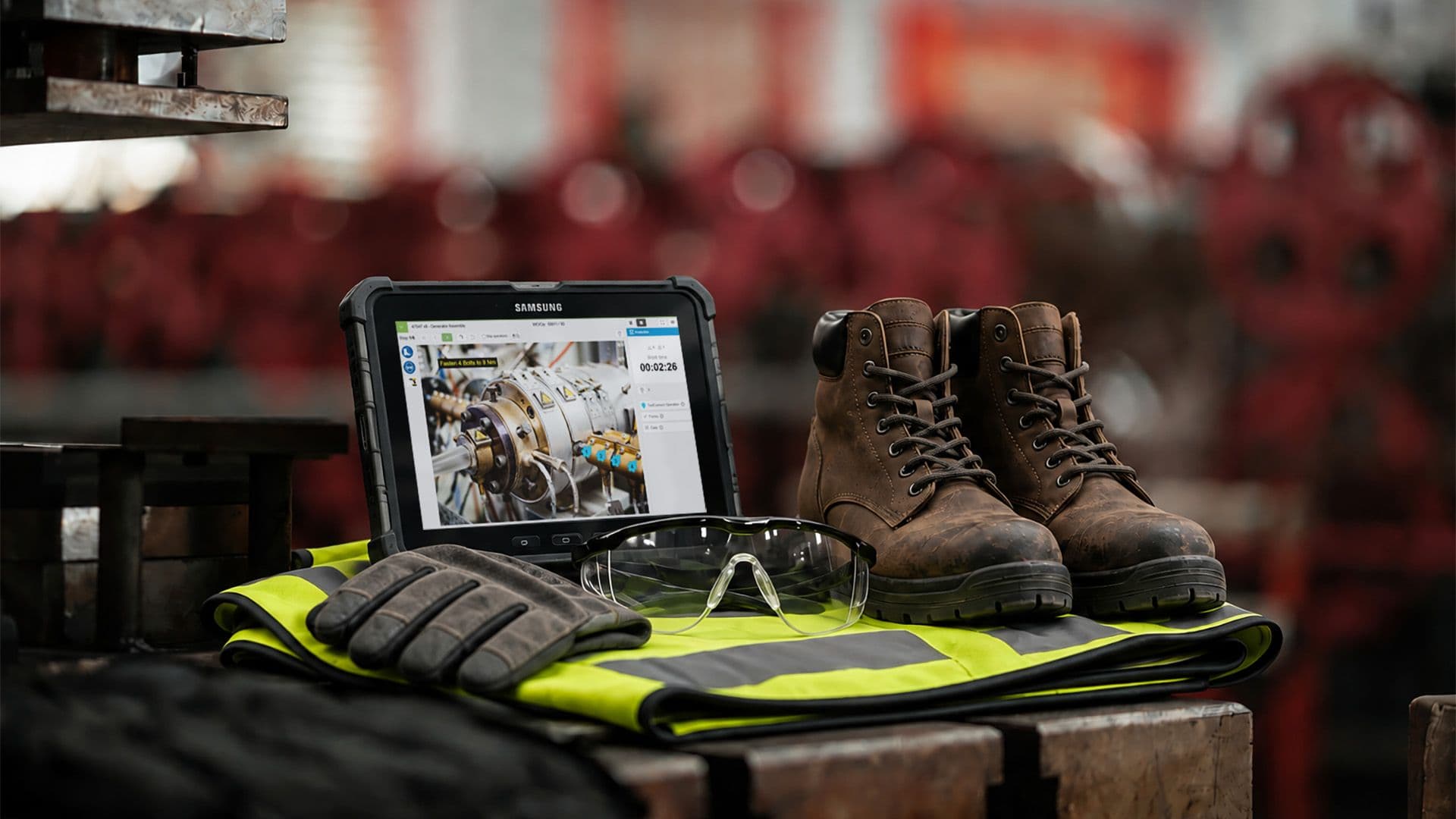


How to Enhance EHS for Manufacturing and Beyond
Over the past decade, workplace injuries, ergonomic fatigue, and non-compliance penalties have remained primary drivers of unplanned downtime, worker absenteeism, and high turnover.
However, most shop floor incidents are completely preventable, as they often stem from poorly defined safety protocols. Instead of a smart solution, many manufacturers still employ static safety binders, outdated training protocols, and poor visibility into daily risk factors.
Building and maintaining a modern Environment, Health, and Safety (EHS) plan requires deliberate strategy.
If a company doesn’t take care of their employees, their employees won’t take care of their work or the company’s investment.
However, while traditional EHS management relies on static PDFs and/or disconnected portal forms, smart solutions like digital work instructions can embed health and safety directly into daily production work instructions. By leveraging smart solutions, manufacturers can transform passive safety documentation into interactive, traceably enforced daily routines.
7 EHS Methods Driven by Digital Work Instructions
Before we start this list, let’s go over a few EHS best practices, whether using digital solutions or not.
- Make EHS repeatable: Integrating EHS into your daily manufacturing operations requires turning abstract safety standards into simple, repeatable actions at the workstation.
- Replace paper with digital methods: By replacing static paper checklists with interactive digital guidebooks, manufacturers gain real-time visibility into shop floor risk while making compliance effortless for operators.
- Enforce accountability: Move away from passive policies. Following EHS is not optional, so use tools that guarantee safety protocols are actively followed before work can proceed.
Now, with that out of the way, let’s look at the core pillars for leveraging digital work instructions to build a safer, more resilient facility.
EHS Method 1: Auditing & Inspection Routes with VKS Forms & Guidebooks
The foundation of any effective EHS framework begins with a thorough evaluation of facility risks and operational needs. Safety managers must establish detailed inventories of all physical safety assets. This includes fire extinguishers, eyewash stations, chemical spill containment kits, and Personal Protective Equipment (PPE) reserves. On top of that, they’ll also need to continuously track a multitude of material safety factors, including.
- Expiration dates
- Maintenance cycles
- Recalibration schedules
Equally important is managing hazardous substances. Every workstation using industrial chemicals must provide immediate, friction-free access to required Safety Data Sheets (SDS) and exact, step-by-step first-aid protocols in case of exposure or containment failure.
Instead of managing critical routing with clipboards, paper logs, or easily misplaced spreadsheets, digitizing your EHS processes ensures 100% traceability and compliance verification.
- Go Fully Mobile: Replace paper clipboards with industrial tablets. Inspectors complete standardized smart forms directly along their inspection path. Data feeds instantly into your VKS Production Reports without manual entry.
- Embed Templates & Repeated Forms: Nest specific equipment maintenance checklists (such as detailed inspection steps for individual fire extinguishers or respirator fit tests) directly into broader facility-wide audit guidebooks.
- Dynamic Routing: Use conditional logic to adapt inspections based on variable factors. This includes seasonal environmental changes, machine usage thresholds, or distinct shift requirements. This then ensures inspectors only see relevant steps.

EHS Method 2: Embedding EHS Into Your Manufacturing Culture
For an EHS program to succeed, safety must become a seamless, dynamic element of daily shop floor culture.
From experienced technicians handling corrosive compounds to new hires performing repetitive assembly steps, every employee must actively participate in hazard recognition and reporting. Digital work instructions allow safety authors to weave interactive training materials and real-time knowledge checks directly into daily production steps.
- First-Aid Kit Verification: Leverage digital Bill of Materials (BOM) functionality within VKS to check first-aid kit inventories during regular routing, automatically issuing restock requests if supplies drop below required thresholds.
- Dynamic Safety Pictograms: Add visual safety warnings and PPE icons directly onto specific guidebook steps to give operators an instant, non-verbal indicator of hazards before they perform an action.
- Hazard Symbol & Chemical Literacy: Embed interactive checklists and forms to either test or ensure operators know hazard signage, proper chemical handling, temporary containment measures, and mandatory clean-up procedures.
EHS Method 3: Standardizing Lockout/Tagout (LOTO) Using Forced Step Verification
Often, when it comes to high-risk activities, such as heavy machinery maintenance, electrical panel servicing, and enclosed space entries, there is zero margin for error. Inadequate energy isolation during machine maintenance remains one of the top causes of severe industrial injuries.
By embedding digital Lockout/Tagout (LOTO) and high-risk safeguards directly into work instructions, manufacturers ensure that critical steps are never skipped or assumed.
- Visual Zero Energy State Instructions: Display step-by-step images and callouts marking every electrical, hydraulic, pneumatic, or mechanical isolation point on the specific machine model being serviced.
- Enforced Step Verification: Ensure and track that the proper steps were followed with visual proof (e.g., photo capture of locked switches or pressure gauges reading zero) before allowing the software to advance to maintenance tasks.
- Verify with Connected Machinery: Utilize IO Connect to program work instructions to require a safe signal from connected machinery
- Multi-User Clearance: Require dual-verification sign-offs from both the maintenance technician and the safety supervisor before energy sources can be safely restored.
EHS Method 4: Enforcing Shop Floor Safety with VKS Smart Access & Certification Groups
An injury impacts a human life first. But an injury also disrupts a few other important details:
- Production throughput
- Shop floor morale
- Workforce placement
- And more.
Preventing incidents requires verifying that every single worker operating a piece of equipment is fully certified, alert, and equipped with the correct gear.
Work instruction software provides automated visual and system safeguards to systematically lower operational risk:
- Access Control via Certification Groups: Automatically restrict access to complex or high-risk machine guidebooks. If an operator's safety certification is expired or missing, the software prevents them from launching the procedure.
- Mandatory Training Updates: Automatically trigger required re-acknowledgments whenever an EHS protocol or engineering change is made to an operational guidebook, ensuring operators review new safety notes before running the job.
- Visual PPE Alerts: Present high-visibility pictograms and pop-up warnings indicating mandatory safety equipment (e.g., arc flash face shields, heavy-duty gloves, or hearing protection) before the operator can begin work steps.

Pro Tip: Prevent uncertified operators from launching high-risk procedures. By linking VKS Certification Groups to specific guidebooks, the system automatically blocks access if an operator is not adequately certified.
EHS Method 5: Increasing Ergonomic Check-Ins & Actions
Beyond immediate physical hazards, repetitive strain injuries (RSIs) and poor ergonomic setup are among the leading causes of chronic pain, reduced worker output, and long-term disability claims.
Building ergonomic awareness directly into daily operational guidelines keeps workers healthier and more energized throughout their shifts.
- Ergonomic Workstation Adjustments: Build mandatory setup steps into the start of every order, prompting operators to adjust workbench height, lighting, and tool balancers to match their physical posture.
- Micro-Break & Stretch Prompts: Program smart intervals within long assembly procedures to display short video demonstrations of targeted stretching routines designed to relieve muscular strain.
- Real-Time Fatigue & Feedback Surveys: Embed micro-surveys into digital guidebooks allowing operators to easily log physical discomfort or ergonomics issues, enabling continuous improvement (Kaizen) for workstation design.
Pro Tip: According to OSHA, employers pay more than $15-$20 billion in workers' compensation costs for ergonomic injuries. Yet embedding automated micro-stretch breaks and workstation setup steps directly into your digital work instructions can drastically reduce physical strain while keeping operator focus high.
EHS Method 6: Simplifying EHS Audits with Automated VKS Production Reports
When OSHA, ISO, or internal auditors arrive, speed and precision are critical. Scouring through paper filing cabinets, binder shelves, or disparate spreadsheets for historical inspection records is slow, disorganized, and introduces compliance risks.
When safety routines and inspections are executed digitally through VKS work instruction software, all compliance data is automatically compiled into centralized, tamper-proof Production Reports.
- Automated Compliance Trails: Capture exact timestamps, inspector names, checklist responses, software versions, and supervisor signatures automatically with zero extra paperwork.
- Visual Media Verification: Store high-resolution, time-stamped images captured during inspection routes directly within the digital audit record as non-negotiable proof of compliance.
- Instant Serial & Asset Search: Scan equipment barcodes or serial numbers to instantly pull up complete, historical audit trail reports for any asset on the shop floor within seconds.
EHS Method 7: Key Metrics & ROI
A successful EHS program should drive tangible economic value by maximizing operational uptime and reducing financial liability.
To demonstrate the impact of digital EHS execution to leadership, track key leading and lagging key performance indicators (KPIs).
| EHS Metric Category | Target Performance Indicators | Impact of Digital Work Instructions |
|---|---|---|
| Leading Indicators |
• Inspection completion rate • Safety hazard submissions • On-time certification renewals | Ensures 100% route completion and encourages active operator feedback directly from the screen. |
| Lagging Indicators |
• Total Recordable Incident Rate (TRIR) • Days Away, Restricted, or Transferred (DART) • Lost Time Injury Frequency Rate (LTIFR) | Enforces LOTO, PPE compliance, and ergonomic breaks to actively drive incident rates toward zero. |
| Financial & Operational |
• Workers’ comp claims • Audit preparation hours • Equipment repair downtime | Streamlines audit prep from days to minutes and reduces machine damage caused by skipped safety checks. |
Building a Resilient Safety-First EHS Operation
Prioritizing EHS (Environment, Health, and Safety) is about building a culture where workers feel protected, empowered, and equipped to do their best work. By shifting away from static paper forms and adopting interactive digital work instructions, you turn abstract safety policies into clear, repeatable daily habits on the shop floor.
Whether your goal is to streamline your next regulatory audit, lower incident rates, or simply protect your team, taking a digital approach to EHS transforms workplace safety from an administrative burden into a core operational strength.