The legacy approach
Operators Building From Memory
New and temp hires build to the wrong spec. Quality drops with every turnover.
The VKS advantage
Guided Execution
Every operator builds to the current standard from their first shift.
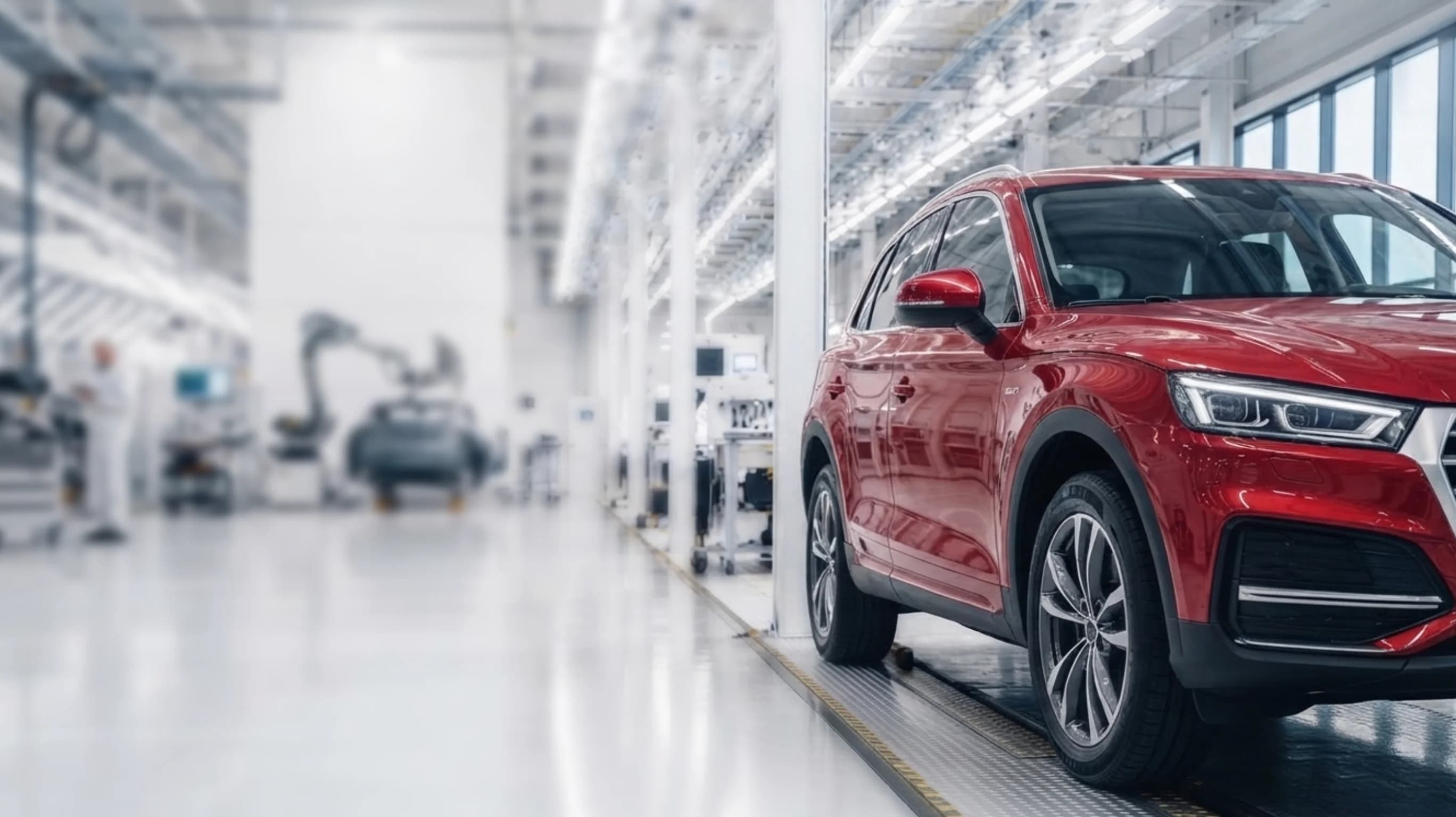
Connected worker platform for
Standardize mixed-model assembly across every shift. VKS gives automotive production teams visual step-by-step guidance, IoT tool integration, and complete VIN-level traceability.
Demand shifts, engineering changes, and workforce turnover reshape the line constantly. Relying on operator memory and paper instructions exposes your operations to defects, rework, and lost expertise.
Every operator builds to the current standard from their first shift.
The right build steps per VIN, served automatically for the unit on the line.
Defects can't advance past the station.
Every operator builds to the current standard from their first shift.
The right build steps per VIN, served automatically for the unit on the line.
Defects can't advance past the station.
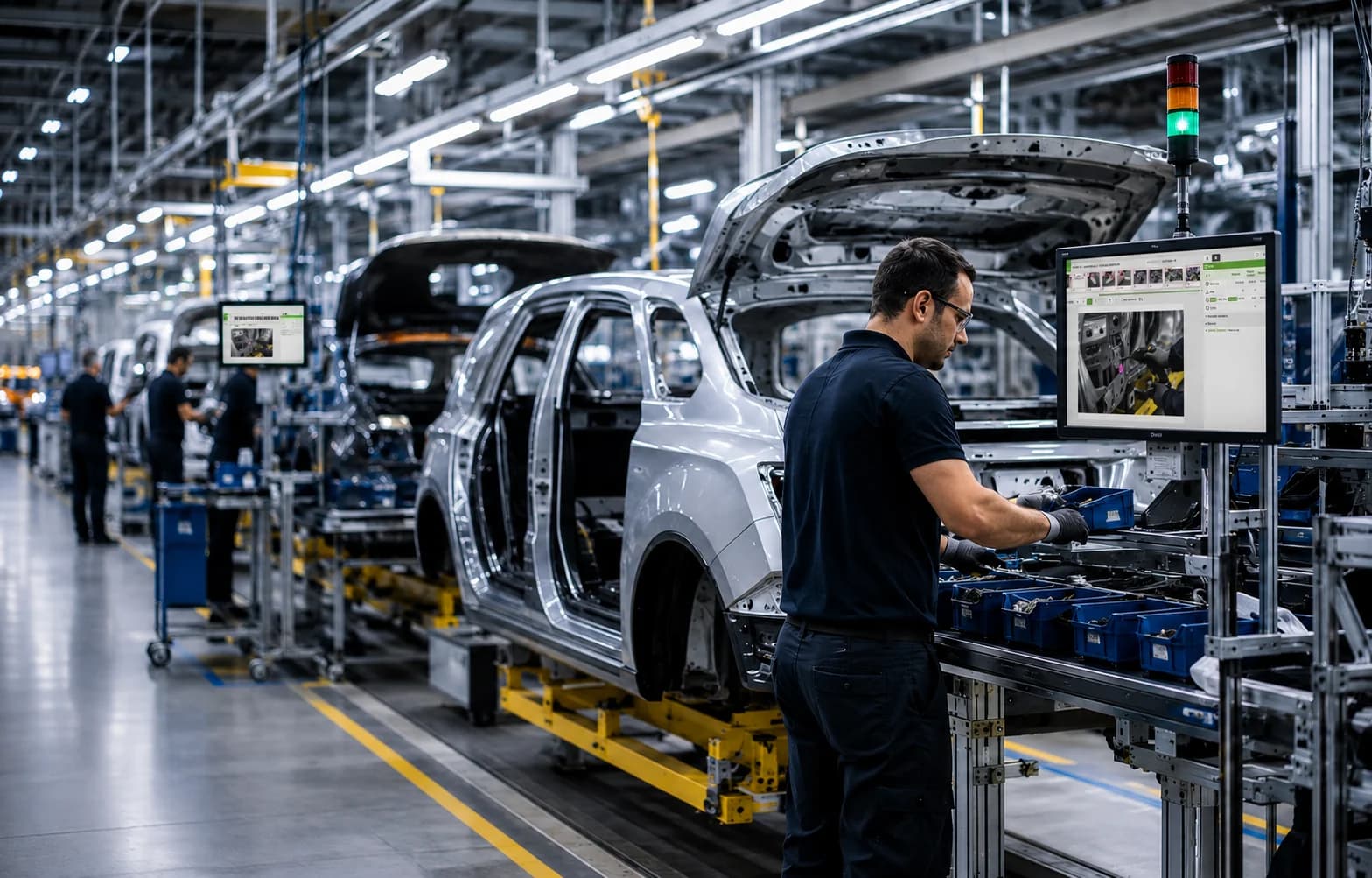
Run VKS as a standalone visual assembly guide for error-free shift execution, or link it to your MES, PLCs, and smart tools to enforce VIN-level traceability and productivity tracking.
New hires build to expert standards from day one.
Update a step once at the source and deploy it live across every workstation.
Prevent out-of-spec steps with smart tools and live Andon light status indicators across the floor.
Trace any defect by serial, VIN, data, or operator.
Preserve retiring workforce expertise in standardized visual guides.
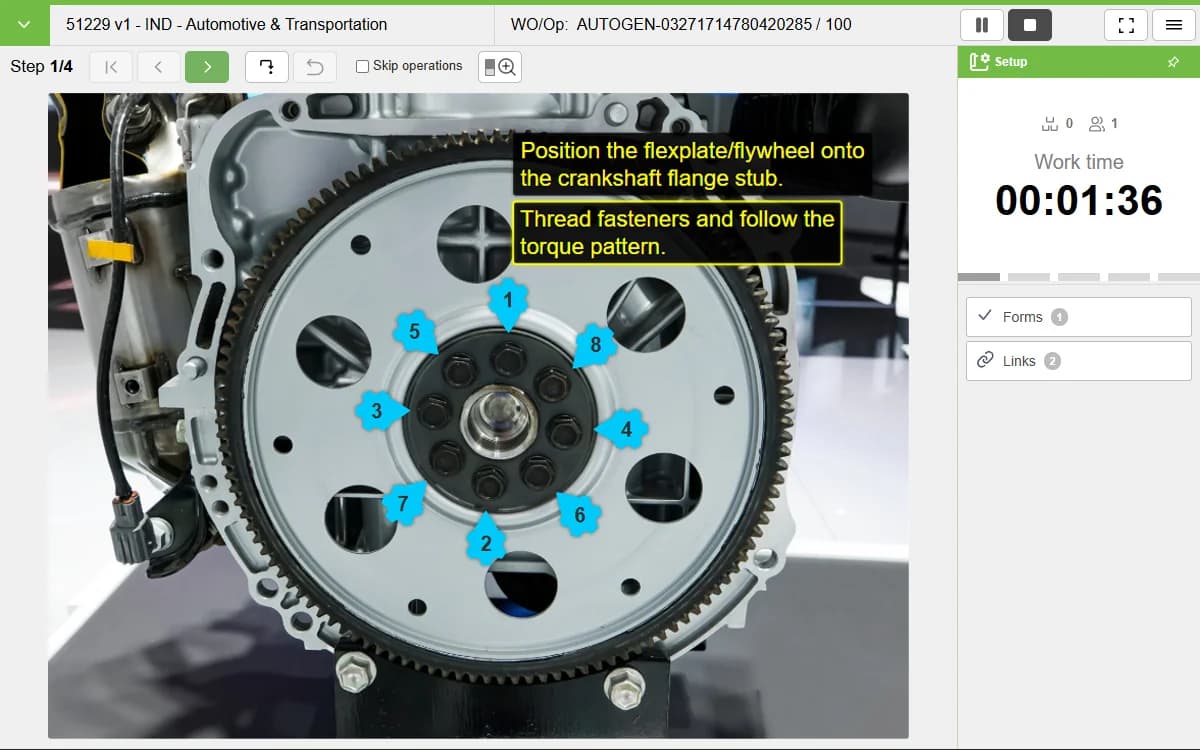
VKS opens the correct instructions and build record for the unit at the station.
The operator follows visual, work-order-specific instructions.
Andon lights, vision systems, PLC signals, and digital inspections must pass before the step advances.
Cycle completions and takt times are logged automatically, allowing teams to see efficiency and productivity in real time.
The ability to connect VKS to our internal MES system improved the auto-creation of instructions while tying in parts and customer options. This drives a seamless experience for the operator.

Our efficiencies got better, our quality got better, our financials got better. It was a testament to VKS to see how quickly, with onboarding skilled workers without disrupting production performance. In fact, our KPIs kept improving.

Now, our employees ask for VKS if a VKS work instruction doesn't exist for that product yet.


Explore your potential savings or let us walk you through the platform live.

FAQs
Compliance, deployment and integration questions we hear most from regulated shop floors.
Talk to our teamVKS serves as a real-time visual guidance and error-proofing layer for high-speed, mixed-model vehicle assembly lines. It integrates directly with shop floor PLCs, vision systems, and smart tools to guide operators through station-specific builds based on the active VIN scan. The platform enforces strict poka-yoke gates, preventing out-of-tolerance steps from advancing downstream. At the same time, VKS automatically captures full part-level genealogy for every unit produced.
Yes. When an engineering change order (ECO) occurs, authors edit the visual instruction at the source and automatically route it through customizable approval workflows. Designated stakeholders like Quality Managers, Process Engineers, and Shop Floor Supervisors must review, e-sign, and authorize the revision before it can be released. Once signed off, the updated version deploys to the line instantly, archiving the previous version and keeping a detailed audit log of who approved what, when, and why to maintain strict IATF 16949 compliance.
VKS dynamically adapts work instructions based on the specific VIN or unit serial number scanned at the station. Instead of requiring operators to manually check option-code sheets, VKS pulls the active bill of materials (BOM) from your ERP/MES and displays only the visual steps, torque specs, and parts required for that specific vehicle variant. This eliminates wrong-part installation errors on mixed lines.
Yes. Grounded in native manufacturing experience, VKS is built for intuitive shop-floor adoption, allowing new or temporary operators to build complex mixed-model assemblies accurately on day one. Because the platform requires zero specialized software training, plants achieve fast time-to-value.