01
Slow, Expensive Deployments
Traditional MES platforms can take months to deploy, requiring significant time, resources, and investment.
Discover how the VKS human-centric Manufacturing Execution System bridges the gap between your operators, your quality data, and your machines. Build a more agile, responsive factory floor.
See VKS in Action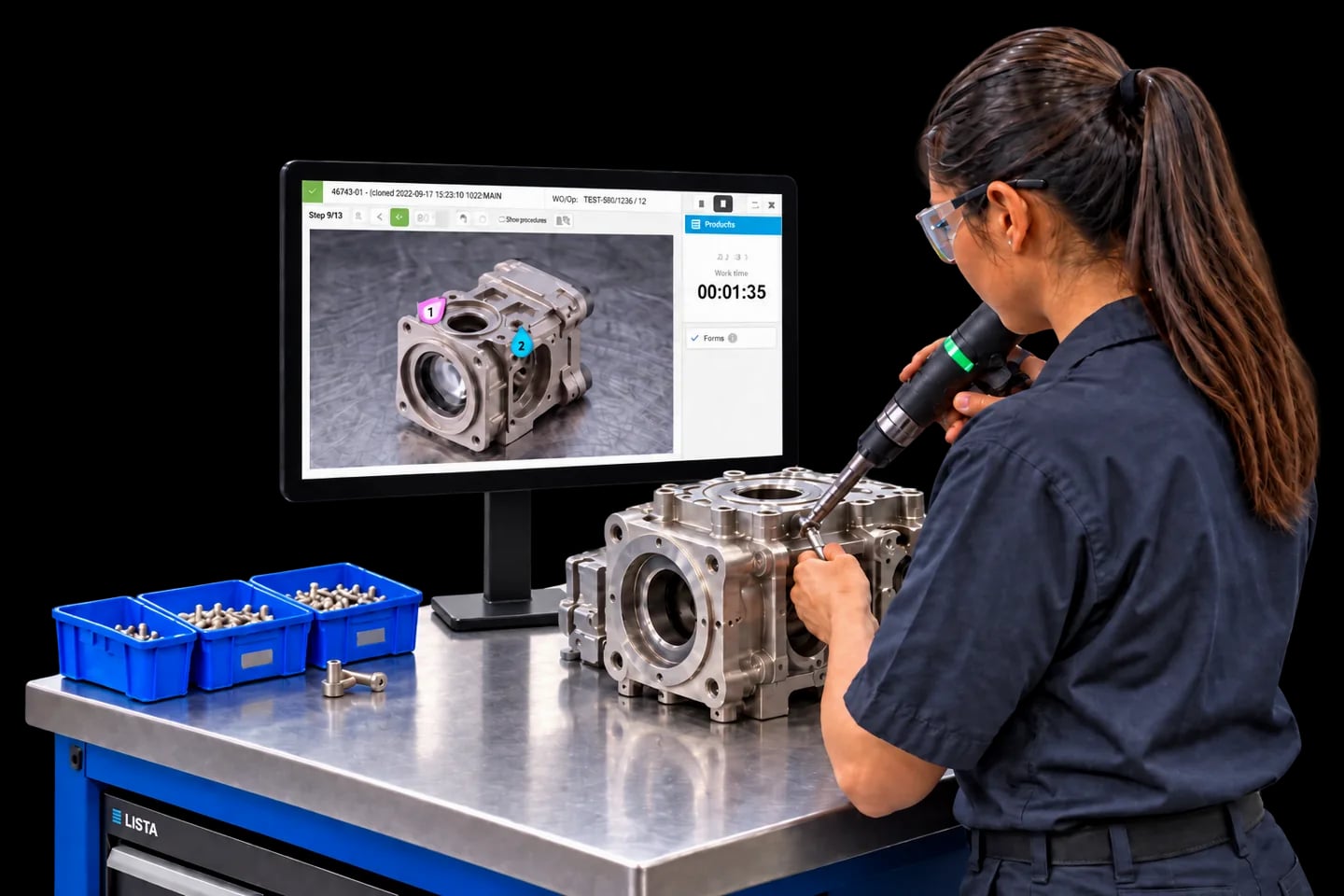
Deliver adaptive digital guidance that adjusts to worker skill levels.
Connect operators with smart tools, IoT sensors, and ERP/PLM systems.
Capture shop-floor data to build compliant, audit-ready product records.
Gain harmonized data between your systems, devices and people.
Why traditional execution platforms fail the shop floor.
Traditional MES platforms can take months to deploy, requiring significant time, resources, and investment.
Operators are forced to juggle static work instructions, isolated quality forms, and manual time tracking.
Traditional execution systems can make shop floor processes difficult to adapt quickly.
Unintuitive interfaces increase training time, slow down data entry, and cause human errors.
A Human-Centric MES is an intuitive Manufacturing Execution System designed around the worker and their workflow. This modern MES guides workers with digital work instructions that adapts to their skill levels, integrates with their physical tools, and captures data automatically as they work.
Tracks combined worker and machine performance to deliver precision analytics and AI insights on efficiency and cycle times.
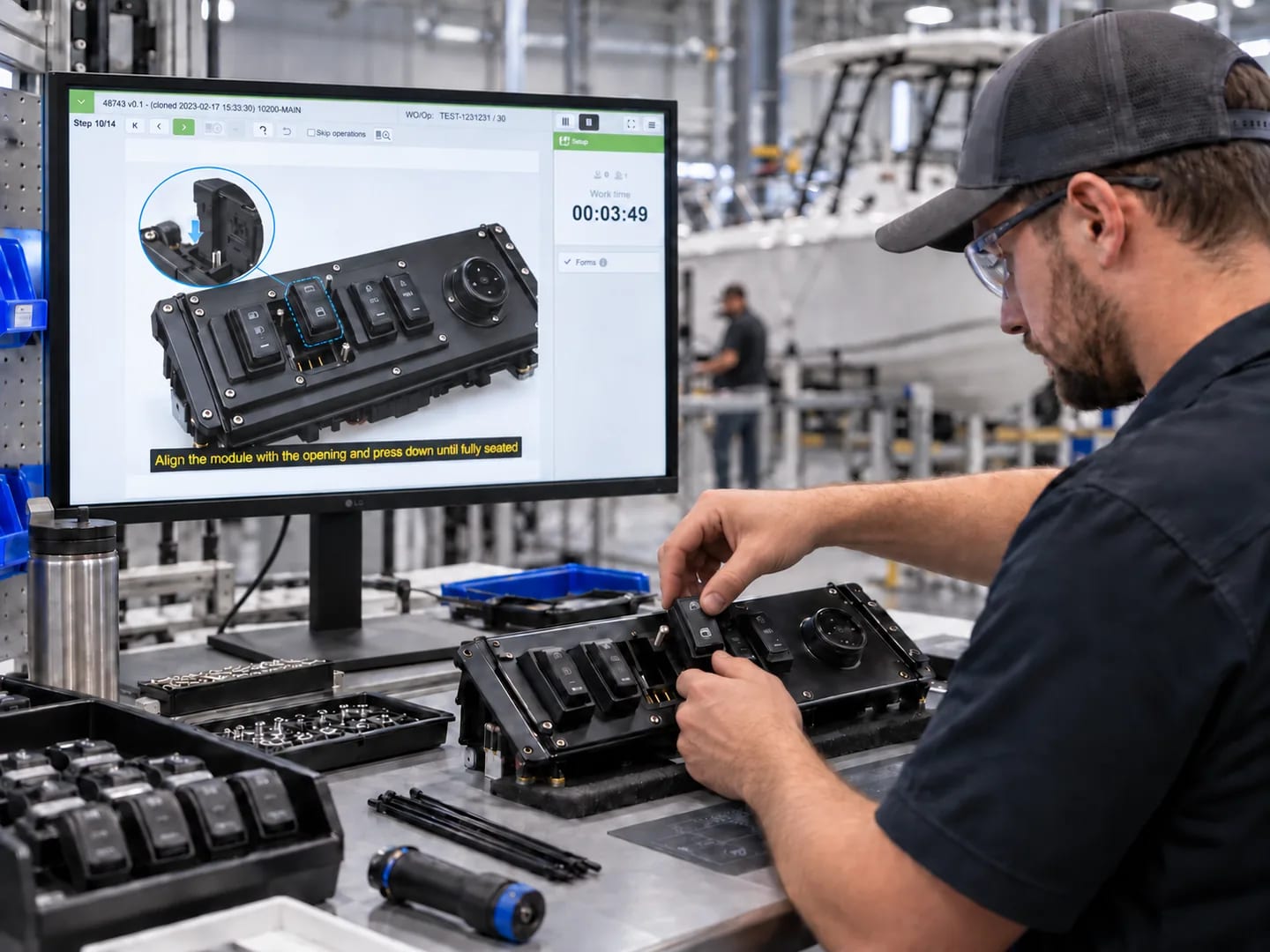
Provides responsive, visual work instructions via a modern, intuitive UI designed specifically for smooth operator workflows.
Uses digital instructions to guide operators, eliminating reliance on tribal knowledge and enabling fast training and onboarding.
Purpose-built for discrete assembly with flexible configurations, allowing instant updates to instructions or quality gates.
In Action: Work instructions auto-adjusts in real time, matching pace and detail to skill level, part complexity, and specification.
Explore how a human-first approach solves the unique operational
challenges of your industry.
High-variation, audit-ready guidance for AS9100 compliance.
Explore AerospaceEliminate downtime with sensor-driven error-proofing (Poka-Yoke) built into every workflow.
Explore Medical DevicesRapid process updates for high-mix, low-volume assembly.
Explore Electronics & TechnologyDynamic work instructions to manage high product variation.
Explore Industrial MachineryWhether you are looking to deep-dive into our product capabilities or want a tailored
walkthrough of the platform, we have a path for you.
Traditional MES systems focus heavily on tracking machine uptime and equipment data, treating operators as manual data-entry points. A human-centric MES, like VKS, prioritizes the worker's workflow by integrating real-time digital instructions, smart tools, and automated data capture to guide operators and eliminate manual reporting.
Most legacy MES platforms are engineered around machine assets rather than human movements. Because these rigid systems force operators through constant screen-tapping, complex menus, and manual data-entry, they disrupt the natural assembly flow, slow down production, and create a frustrating user experience that discourages daily use.
Absolutely. Because data collection is built directly into the operator's step-by-step workflow, the system automatically compiles electronic Device History Records (eDHRs) and digital product records. This provides a complete, error-proof, and fully traceable audit trail for strict standards like AS9100 and ISO 13485.
Without real-time and responsive guidance, traditional MES solutions will always leave the skills gap open. On the other hand, a human-centric MES dynamically adjusts to match the specific skill level of the operator. New hires receive comprehensive, step-by-step visual training directly at the workstation, accelerating onboarding times from months to minutes.