

How do you unlock the potential of manufacturing business intelligence?
The manufacturing industry is a powerhouse of data generation. In a study from Deloitte, US manufacturers were shown to generate 1,812 petabytes of data annually. To put this into perspective, that’s roughly over 500 billion pages of a typical Word document. And, this number is only increasing as manufacturers find more ways to gather data, such as through worker-centric MES systems and work instruction software.
However, while gathering data is vital to the manufacturing floor, companies also need to transform and analyze it. And on top of that, they need a quick and simple method that upholds their data integrity.
With masses of quality and operational data being generated every second, how can manufacturers get the most out of their data and achieve a higher degree of manufacturing business intelligence?
Answer: Integration through the BI Connector
What is the BI Connector?
The BI Connector is a plug-and-play standard connector that empowers you to seamlessly push manufacturing data into their BI (Business Intelligence) software. This new integration leverages digital work instructions and BI software to seamlessly capture and analyze quality data, productivity metrics, torque tool data, operational insights, and more custom criteria.
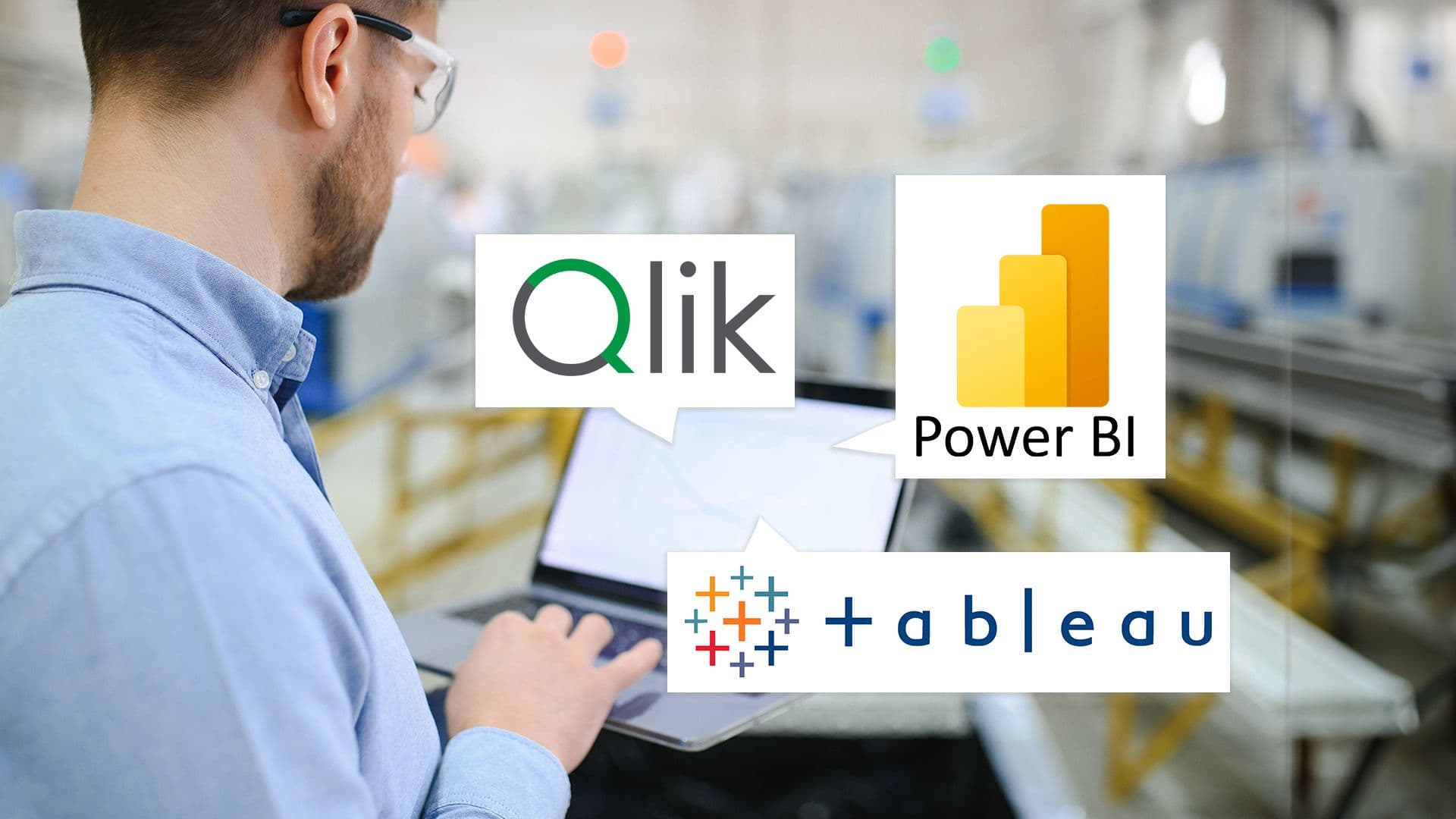
In practice, as workers are guided through their standardized tasks, VKS work instruction software gathers multiple data sets directly from every process. Using the BI Connector, this data is automatically pushed to an integrated BI software like Power BI, Tableau, or Qlick.
Within this software, leaders can create custom dashboards and KPIs to accurately measure performance and quality.

By integrating work instruction software and BI systems, manufacturers can have all their data within one single source of truth to achieve a more detailed and actionable understanding of their operations, driving improvements in efficiency, quality, and overall performance.
3 Solutions for Manufacturing Business Intelligence
When beginning your business intelligence journey, there is one question you need to ask before all others.
What types of manufacturing data do you need?
The BI Connector offers three distinct solutions to gather and analyze the manufacturing data and insight you need.
- Quality Traceability
- Operational Insights
- Custom Integration
Let’s explore each of these solutions and discover how to leverage and analyze your manufacturing business intelligence to its fullest potential.

BI Connector Solution 1: Quality Traceability
When it comes to any manufacturing process, quality is king. By digitally standardizing your processes, you and your team can implement a high level of error-proofing. But you’ll still want to track this data and ensure you’re constantly hitting the highest-quality performance.
With this BI Connector solution, every time a digital form, quality checklist, inspection, or production data is completed in VKS, the information is automatically pushed to the BI Software via our Push API Notifications.
The Quality Traceability solution of the BI Connector is built specifically to ensure you can store and analyze the quality data you need. This includes:
- Quality Inspections: Automatically push results from every quality inspection that is performed before, during, or after a process in real time. Using BI Software, you can organize these results to find trends across shifts, personnel, departments, and materials.
- First Pass Yield (FPY): Track the efficacy of your process by measuring the number of good units that pass quality standards the first time. This metric helps discern if a process is healthy or needs work.
- Non-Conformance Data: Track when parts, materials, or final products are outside of specifications. Use advanced analytics within BI software to pinpoint root causes and enact resolutions quickly.
- Product Data: Document the complete production process of every unit that moves through your shop floor. This includes the dates of production, the quantity produced, the methods used, the employees who worked on the units, the labels of the final product, and much more.
- eDHR (electronic Device History Record): Compile the product data of every unit to create comprehensive records. Maintain a clear and accessible library of eDHRs for audits and compliance purposes.

By gathering and analyzing the above manufacturing data sets, gain access to a manufacturing business intelligence playground full of valuable quality data.
BI Connector Solution 2: Operational Insights
In addition to the already valuable manufacturing business intelligence gained by the Quality Traceability solution, companies can enhance their BI software integration with Operational Insights. This solution pulls real-time performance data directly from the standardized instructions and enables teams to analyze their data intelligently.
In this case, as users complete work orders, operations, and cycles in VKS, the data is automatically transferred to their integrated BI System.
- Live Job Status: Monitor each job on the shop floor. Real-time updates are logged and pushed to the BI software as operators complete cycles or when specific actions occur within the job.
- Work Order & Operations: Track the completion of work orders and operations while also dissecting the data to measure the effects of changes, re-work, and other actions taken on the shop floor.
- Productivity & Efficiency: Measures task completion times, idle times, and operator performance based on defined benchmarks. Analyze this data to measure OLE (Overall Labor Effectiveness).
- User Time: Capture user completion times, time spent on each task, and step-by-step interaction data. Use this data to perform time studies and review how long each step is taking.
- Statistical Process Control (SPC): Using manual inputs or automated sensors, VKS enables teams to capture SPC data (e.g., temperature, pressure, dimensions, etc,) and alert the operator if values are outside of tolerance levels. Use BI software to expand this data and monitor quality trends within customized control charts.

In essence, gaining a firm hold of your manufacturing business intelligence enables you to dissect and organize your data in the most efficient and worthwhile manner for you and your team.

Pro Tip: Did you know that you can track the job status of individual work orders and operations within VKS? Simply use the new Work Order Status Cards and the new Operations Insights page to monitor your team's performance in real time.
BI Connector Solution 3: Custom Integration
The third solution, Custom Integration, allows you to take the benefits of the previous two solutions and add a final layer of customization to your manufacturing business intelligence strategy.
In this case, this Custom Integration allows teams to pull data about the standardized processes themselves and the qualifications of their workers.
This additional custom data includes:
- Guidebook Data: Gain a detailed look at how your standardized processes have evolved over time. Analyze your guidebooks’ version histories, usage/completion frequencies, and implementation times. By analyzing this data with BI software, you’ll be able to see which guidebooks and versions were the most successful on the shop floor.
- Training & Certifications: Using the user profiles in VKS, create a comprehensive training and skills matrix for all your workers. This type of employee tracking enables you to visually see the skills of the workforce, plan training/cross-training activities, and enact smarter workforce planning.

Additionally, users can also pull data from their various VKS add-ons such as ToolConnect IoT to capture actions and outcomes of torque tool use.
- Torque Tool Results: Organize and analyze torque readings to track the application and trends of torque tool use. This data can also be shared with customers for quality assurance.
The Top 5 Advantages of Manufacturing Business Intelligence
Funneling data from your digital work instructions into BI software offers an endless number of advantages for manufacturing business intelligence. This is because you can gather, organize, and analyze data the way you need to. With custom data acquisition methods in VKS and custom dashboards and metrics within BI software, there are innumerable solutions to discover.
While we may not be able to list them all, here’s a fair shot at the top 5 advantages of this integration.
- Enhanced Analytics & Reporting: Work instruction data provides granular details about production processes, which can be analyzed for performance improvements and operational efficiency. BI tools can generate tailored reports that highlight specific metrics, such as first-pass-yield rates, cycle times, completed quantities, and more.
- Data Integrity & Consistency: Create a single source of manufacturing data analysis. The BI Connector ensures that all departments access the same up-to-date and accurate information, promoting consistency across the organization.
- Customized Reports & KPIs: Design and customize dashboards and reports to present data and insights tailored to the unique preferences of departments and teams.
- Leverage AI Analytics: Depending on the BI software you choose, many offer AI services that will identify areas for improvement while exploring data hierarchies that break down metrics and determine future outcomes and trends.
- Easy-to-get-started: The standard integration is a plug-and-play service, empowering you to immediately begin pushing data and transforming it into actionable insights.
Why is Manufacturing Business Intelligence Now More Important than Ever Before?
Knowledge is power. But sometimes, with so much manufacturing data flowing through our operation, it can be challenging to transform your valuable knowledge into actionable insight. For this reason, adopting an integrated BI solution is quickly becoming a standard practice for smart manufacturers desiring to get the most out of their operations.
For this reason, we created a standard connector for our work instruction software, allowing you to pull, organize, manage, and analyze your data in precisely the way you need.
So, how will you integrate your manufacturing data?
If you’d like to learn more about how you can get the most out of your manufacturing business intelligence, book a demo with one of our experts today!