


Industry 4.0 is changing manufacturing through automation, connected systems, and data exchange. By focusing on end-to-end digitization, Industry 4.0 connects technologies across the manufacturing environment.
It does this by linking digital systems with value chain partners. It creates value by generating, analyzing, and sharing data. This allows manufacturers to make more informed decisions based on real-time information.
When manufacturers have accurate, real-time data, they can make better decisions. They can spot quality issues sooner. They can aim for zero defects.
The interaction of hardware, software, and communication also creates connected and increasingly automated manufacturing systems. These systems use sensors, RFID, machines, and software to cut waste. They improve visibility and support more consistent production.
What Does Industry 4.0 Adoption Mean?
The transition to the fourth industrial revolution requires flexible tools. For example, adopting smart software solutions empowers companies with optimal interoperability and real-time transparency.
Industry 4.0 adoption means connecting manufacturing systems so companies can collect, share, and analyze real-time manufacturing data. This allows teams to better understand production performance and make data-driven decisions .
It can help manufacturers overcome communication, data quality issues and limitations, leading to:
Integration of vertical and horizontal value chains
Vertical Integration: Unifying the Shop Floor to the Executive Suite
Vertical integration is about creating a seamless digital thread inside company walls. This bridges the gap between hardware sensors, control systems, and enterprise management software (ERP). Organizations gain instant visibility into performance, quality, and workflow efficiency. Augmented reality tools and networked automation further enhance these internal operations.
Horizontal Integration: Connecting the Extended Value Ecosystem
Horizontal integration expands digital connectivity outward, weaving suppliers, logistics partners, distributors, and customers into a unified network. Through real-time tracking, shared IoT platforms, and synced supply-and-demand planning, data flows across the supply chain. This transparency allows businesses and partners to adapt execution dynamically to market shifts, delay disruptions, and changing customer needs.
Digitization of your product and service offerings
Digitization of products includes expanding existing products. For example, you can add smart sensors or communication devices. You can use these with data analytics tools.
It also includes creating new digital products. These focus on fully integrated solutions.
By using new methods of data collection, companies can track how people use their products. They can then improve those products.
Digital business processes and customer access
Expand offerings by providing disruptive digital solutions such as complete, data-driven services and integrated platform solutions. Disruptive digital business models generate additional revenues while optimizing customer interaction and access.
Digital business processes and customer access
Expand offerings by providing disruptive digital solutions such as complete, data-driven services and integrated platform solutions. Disruptive digital business models generate additional revenues while optimizing customer interaction and access.
What Is The Defect Rate In Manufacturing?
Defects happen when a process or feature does not meet its specification, causing a non-compliant condition. Although the explanation is oversimplified, defects equal failure, and for sure, defects are not free.
Defect rate is the number of defects divided by output tested, multiplied by 100. Manufacturers look at defect rates to evaluate and control programs, projects, production, services, and processes.
Tracking defect rates is only useful when manufacturers have accurate production and quality data. Poor data quality can make it hard to find where defects happen. It can also hide the causes. It can be unclear which processes need improvement.
Getting exact figures on companies’ defects is very hard. It is a closely guarded secret. After all, who wants to publish their failures?
From conversations with colleagues around the world, I have heard of companies that still have defect rates ranging from 0% to 90%. That is a big difference.
I remember being an engineering student decades ago and working for an automotive company during the summer. I was surprised by the number of defects the company had.
Simply, by checking all parts they made and how many they shipped to the other factory, the average defect rate was almost 50%. Literally, they had run out of storage space for defective parts. Needless to say, the company closed down pretty soon after that.
I wish I could say that this was the only company that I know with such a bad defect performance. Even recently, I visited a major automotive supplier in America, and the numbers were over 15%. When talking with the Head of Operations, he insisted that their performance was industry standard.
The question on my mind was, "Which industry standard? I asked if he could specify the reasons behind every defect and how they were traced, and got nothing back. The company was marketing itself as a quality leader.
Product defects and productivity can create a lot of interesting discussions. What is more interesting is when you Google defective products. You can see how many liability claims relate to the company’s defects. So, to conclude, defects cost money in many ways, not to mention reputation.
Learn to calculate your ROI in manufacturing.
Why Traditional MES Are Incompatible with Industry 4.0
We all have heard about the Six Sigma method by now, which is one way of measuring and eliminating defects. You can also look at the Pareto Chart and identify your 80-20. You could think of defect management process and follow the steps to identify the cause of the high defect rate.
In short, there are many solutions around, however, none of the above are Industry 4.0 compatible.
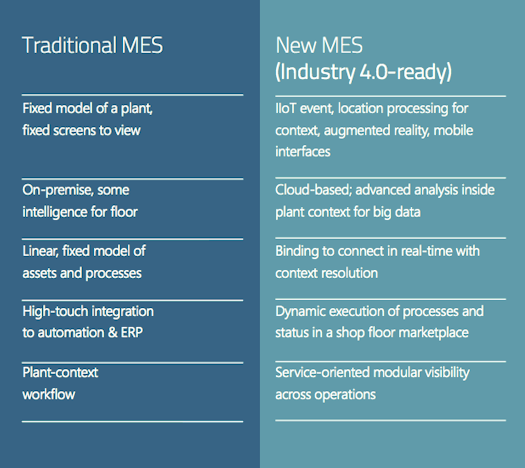
Zero-defect production in Industry 4.0 requires manufacturers to obtain information about the anticipated quality of parts during the respective process steps. You must be able to evaluate the influence of deviating process parameters.
This requires high-quality data that only smart software solutions can provide. Traditional MES solutions aren't Industry 4.0 compatible.
Traditional MES architectures can't handle the speed and scale of Industry 4.0. To bridge this gap and achieve true zero-defect production, manufacturers must modernize four critical pillars of their system:
- Connectivity, sensing, and mobile solutions
- Cloud platform with advanced analysis
- Decentralized approaches
- End-to-end vertical and cross-functional horizontal integration
Digital Work Instructions As A Smart Factory Solution
Smart software tools help companies adapt and improve using real-time data. digital work instructions guide workers through tasks. Accurate business intelligence data records what people do as they work.
Smart factories are increasingly agile, forward-looking, and data-driven, helping prevent downtime and other productivity issues.
In my opinion, it all comes down to data entry quality. We need smart software solutions that can incorporate existing classical solutions but also offer additional benefits. Those intelligent solutions enable benefits such as:
- Acceleration of IT operations,
- Achieving accurate forecasts of product demand and production, based on real-time data,
- Continuous improvement capabilities due to Integrated advanced analytics frameworks,
- Faster service and support to customers,
- Greater visibility into supplier quality levels and greater accuracy in predicting supplier performance over time,
- Identify the most profitable customized or build-to-order configurations of products and services, that impact operation the least,
- Increase of efficiency, revenue, accuracy, quality and yield of production,
- Interoperability of IT infrastructure with other manufacturing and operational systems (ERP , MES, etc.)
- Tracking compliance, workforce enablement, and end-to-end traceability down to each machine,
- Clear visibility into plant performance and deeper insight across multiple KPIs and measures,
- Calculating daily production effects on financial results, with machine-level transparency and detail,
- Strategic services empowerment contributing to customers’ goals by monitoring products and proactively providing preventative maintenance recommendations,
- Unite quality management and compliance systems, making them a corporate priority.
Read how in 4 steps you can become a Smart Factory.
Industry 4.0 Meets "Lean" Manufacturing
According to Deloitte insights, there are five key characteristics of a smart factory:
- Connectivity
- Optimization
- Transparency
- Proactivity
- Agility
Adopting these characteristics will help any company achieve an Industry 4.0 level manufacturing and subsequently lean manufacturing.

All those key traits help us understand the zero-defect production concept and, more importantly, act on it.
Smart Factory And Zero-Defects Quality Assurance
Computer-aided quality is not part of most IT systems. The reason is that most classic IT solutions, including MES, are standard systems. They are not flexible enough to meet a company’s quality assurance needs.
Smart software solutions automate quality processes. Intuitive structures and smart interfaces help companies tailor smart solutions to their specific needs, considering all their quality aspects.

Below is a list of quality issues that help achieve zero-defect production processes.
Measurement equipment CAQ (Computer-Aided Quality) at Industry 4.0 standards
The management of measurement equipment is often not part of the maintenance strategy and execution. This is because of a lack of interoperability between IT systems and measurement equipment. Sadly, this is not possible with most classical IT systems.
Interconnected equipment ensures all-embracing monitoring and provides permanent, up-to-date information. Interoperable capabilities allow automated measurements. This leads to more valuable information and therefore better quality. Smart management of calibration tasks will eliminate measurement failures.
Process Qualification and CAQ
Quality assurance embraces process management control. Smart CAQ functionalities are challenging to obtain. They require 24/7 software monitoring capabilities, and interconnected systems and processes can provide them. This is not an option with classical IT systems.
Smart audit solutions empower you to execute process qualifications and compare your data 24/7. It monitors real-time process deviations and instantly informs you when they occur. The key: Focus on measuring and redesigning your internal processes using real-time information.
Product Qualification and CAQ
Those are often executed by stand-alone solutions or Excel. But classical IT systems do not deeply embed into the IT landscape and production environment. Normally, someone has to capture the data manually.
You can connect the smart solution to the IT landscape and production environment. It can process information in real time.
Quality managers use automated support and continuous monitoring. This helps them run product qualification processes. It also helps them verify that each criterion stays within preset limits.
Ensure 24/7 optimal quality, which continuously fulfils exact product qualification requirements. Monitor key product and process data.
Link it with manual data.
Generate Product Qualification reports.
Use these reports to automate product qualification procedures for every product.
Product quality results and qualification reports will use real-time data monitoring. This will ensure “Best In Class” quality with a mouse click.
Production Tools – Highest Level
Diversification of production tools, coupled with demanding production processes, needs individual approaches to tooling.
Tool quality assurance is a must for any company. It helps the company stay competitive and move into Industry 4.0. Again, this requires real-time monitoring and interoperable processes.
Smart solutions ensure that key quality checks for your tools and test equipment happen on time and correctly. Smart Interoperable solutions create levels of transparency that eliminate tool failures.
Smart Quality Reporting – All-Embracing
To reach flawless quality standards, intelligent, automated reporting processes need to be implemented.
Here, “intelligent” refers to real-time, instantly produced data that connects and aligns the most relevant information. IT landscapes do not deeply embed classical quality systems. This absence of automation restricts your quality reporting capabilities and, as a result, reduces overall efficiency.
Intelligent quality reporting calls for a new kind of software built on comprehensive, end-to-end connectivity.
Smart software tools automatically capture quality data and deliver any configured or fully customized quality reports. Interoperability capabilities with multiple systems, machines, stations, or processes enable you to get instantly updated reports, with minimal effort, accessible from smart devices.
Smart quality reporting sets up key information in advance. It delivers clear conclusions in a simple, intuitive way. This reduces manual work for your team. It lets them focus on higher-value tasks.
Configurable Statistical CAQ solutions
To support statistical quality assurance in real time, you need flexible and adaptable solutions. This is not easy with classical IT solutions.
Intelligent software-based statistical quality assessments are produced by automatically tracking production settings. Using real-time data, you can create many statistical quality analyses that meet your needs and requirements.
The Zero-Defect Production Concept of Industry 4.0
Industry 4.0 is based on technology and devices, autonomously communicating with each other along value chains. It brings opportunities but also challenges as software solutions manage physical processes. Through smart solutions that create virtual copies of the physical world, companies can make the right business decisions.
We will standardize multiple dimensions, such as technological, social, and business paradigm changes. To achieve zero-defect production, companies can use smart, connected operations and products.
These will make teams, materials, energy, plants, and equipment more productive.
Business processes will feel the repercussions throughout the economy of your company. By integrating production planning and control along your value chain, you will enhance traceability and earlier detection, enabling quality improvements and defect reductions. Integrated horizontal planning across partners will increase flexibility, responsiveness, and customer satisfaction.
Industry 4.0, is already happening, and over the next few years, it will pick up pace tremendously. Industrial companies worldwide are digitizing and connecting their value chains. Their products and services are also becoming more digital and connected.
Virtually no manufacturing company anywhere in the world will be unaffected by Industry 4.0. In my experience, this will impact corporate strategies and change companies´ operations.
Reduce complexities, costs, risks, waste, dependency, vagueness and increase simplicity, convenience, interconnectivity, flexibility, productivity and empowerment of your people with Industry 4.0.